Events
The 12th Symposium on Risk Control and Hazard Treatment in Chemical Industry Held in Tianjin Held
The 12th Symposium on Risk Control and Hazard Treatment in Chemical Industry Held in Tianjin, hosted by the China Chemical Safety Association, was held in Tianjin on November 19. Nearly 20 experts and scholars shared best practices for building a dual prevention mechanism, exchanged experiences on the application of digital and intelligent technologies in risk control and hidden hazard investigation and governance, and jointly sought to transition safety governance towards proactive prevention and serve high-quality development with high-level safety. Li Wanchun, former Chief Engineer of the Ministry of Emergency Management, presided over the opening ceremony.
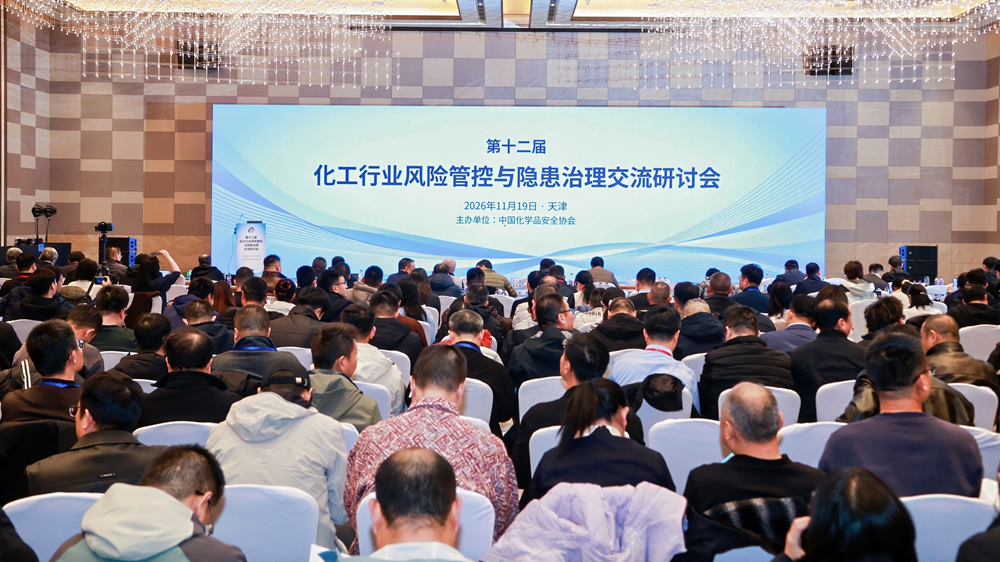
Gao Haishan, Member of the Party Committee and Deputy Director of the Tianjin Emergency Management Bureau, stated in his speech that the symposium has become an important exchange platform in the national chemical industry, and its convening in Tianjin this time will strongly promote local safety production work.
Shang Wenqi, former Work Safety Inspector of the Ministry of Emergency Management and Vice Chairman of the China Chemical Safety Association, delivered a speech on behalf of the host. He stated that risk control and hidden hazard governance are crucial to the implementation of safety production responsibilities and the prevention of major and catastrophic accidents, and the association will continue to build platforms to promote mutual learning and exchange within the industry.
Official from the Ministry of Emergency Management pointed out at the meeting that the overall safety production situation in the chemical industry is improving, but the situation remains severe, and major and catastrophic chemical accidents have not yet been effectively curbed. It is necessary to focus on the risk control of major hazard installations, high-risk sub-sectors, and special operations, and to properly handle abnormal working conditions and network access for monitoring data; it is necessary to conduct comprehensive self-inspections against the criteria for determining major hidden hazard, effectively carry out winter antifreeze and anti-coagulation measures, and strictly prohibit rushing for output at the end of the year and operating with equipment in poor condition.
Cheng Changjin, Chief Engineer of the China Chemical Safety Association, interpreted the AQ 3067—2026 "Criteria for Determining Major Production Safety Accident Hidden Hazard in Chemical and Hazardous Chemical Production and Operation Enterprises," and suggested that enterprises should carry out normalized self-inspections for risks, trace the source for rectification, and promote the dynamic clearance of major accident hidden hazard.
Han Yuxin, Deputy Director-General of the China Academy of Safety Science and Technology, pointed out that behind most major and catastrophic accidents lie problems such as a lack of safety leadership and the failure of the dual prevention mechanism. The construction of safety production standardization is a "top-leader project," which must be integrated with existing systems and daily management to prevent "paper compliance." Professor Wei Hongyuan from Tianjin University proposed that inherent safety measures are most economical and effective when implemented in the early stages of R&D and design, and that reaction safety assessment data is the fundamental basis for engineering scale-up and design. Wang Kai, General Manager of Tianjin Bohai Chemical Yongli Chemical Co., Ltd., believes that safety leadership focuses on setting the direction, leading by example, and ensuring implementation, and it is necessary to break down departmental silos, introduce external expertise, and promote intelligent control. Mark Skelton, Technical Director of TÜV Rheinland Germany, emphasized that the best practices in safety management are not just about completing risk analysis, but more about keeping the safety barriers upon which the analysis conclusions rely continuously effective; new technologies only have value if they serve this purpose.
In the afternoon, parallel meetings were set up on site where 14 experts gave special reports; in the evening, the enterprise salon focused on emergency accident prevention and control, employee safety training, and the application of AI in safety production work.
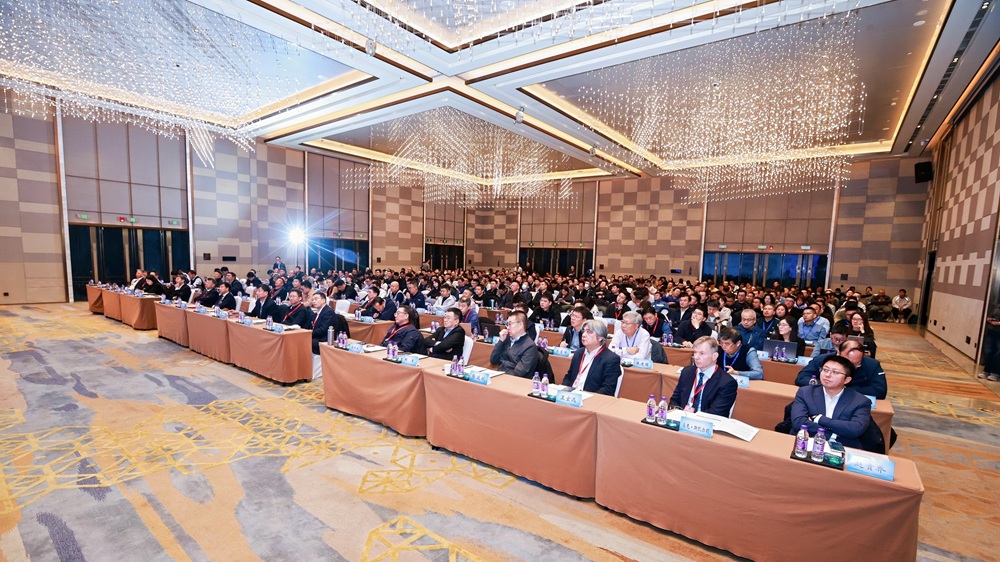
More than 400 delegates from emergency management departments, chemical enterprises, universities and research institutes, and safety consulting service agencies across the country participated in the event.