Events
First Training Course for Chief Responsible Persons of Nitration Enterprises Held in Shangyu District, Shaoxing
On March 26, the Nitration Branch of the China Chemical Safety Association held the first training course for chief responsible persons of nitration enterprises in Shangyu District, Shaoxing, Zhejiang Province. The training analyzed nitration-related accident cases, interpreted guidelines for the investigation of potential risks and hidden dangers, shared safety experience, and discussed inherently safe technologies. It aimed to strengthen the legal awareness, risk awareness, and responsibility awareness of leaders in nitration enterprises, curb the frequent occurrence of nitration accidents, and promote the healthy development of the industry. Officials from the First Department of Hazardous Chemicals Supervision of the Ministry of Emergency Management provided guidance for the training and put forward requirements for nitration safety work.
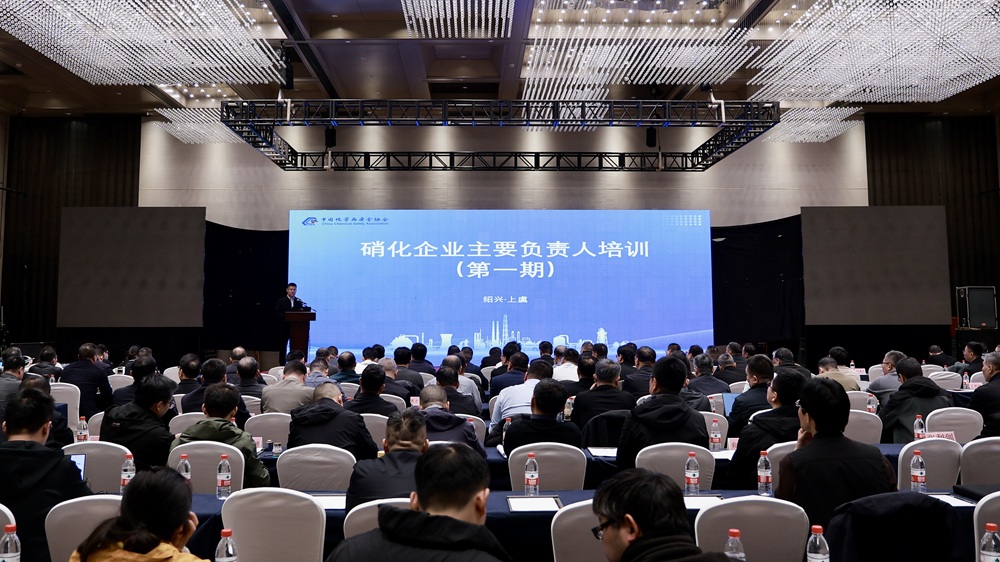
As one of the first hazardous chemical processes under key supervision, nitration has long been a major focus of chemical safety work. In recent years, multiple explosion accidents at nitration-related enterprises have brought nitration safety into the spotlight. This training analyzed risk points across the entire process chain, including nitration reactions, material storage, and process operations. It explained key methods for risk identification and control, and guided enterprise personnel to master the core elements of nitration process safety management. Fourteen domestic accidents in the nitration sector over the past decade were reviewed, with in-depth analysis of their causes and lessons learned. Real accident scenarios were reconstructed through videos and AI models, sounding a strong safety alarm for the nitration industry based on factual cases. The training also clarified key points, priorities, and regulatory requirements for identifying and addressing nitration safety hazards, enabling enterprises to clarify inspection priorities and master effective investigation methods. In addition, outstanding enterprises in the sector shared their experience in dynamic microchannel reaction technology and continuous process transformation. From the perspective of technological innovation, this provided clear and feasible pathways for nitration enterprises to upgrade their inherent safety levels.
Group discussions and workshops were held during the training to jointly deliberate on strategies for safe development. Many principals of nitration enterprises stated in their speeches that this training was rich in content, thought-provoking, practical, and effective. In particular, the "Seven Inquiries" proposed by the Ministry of Emergency Management attracted high attention. Every enterprise leader should conduct self-examinations in response to these inquiries and find solutions to ensure safe production. Nitration enterprises are expected to earnestly implement the requirements of "Three Improvements and Two Reductions" —upgrading nitration process technology, enhancing automatic control systems, improving personnel qualifications and professional competence, reducing material quantities, and cutting on-site staffing —to elevate inherent safety levels and jointly pursue the safe and high-quality development of the nitration industry.
Nearly 100 senior executives from nitration enterprises in Shandong, Zhejiang, and Jiangsu provinces attended the training.